
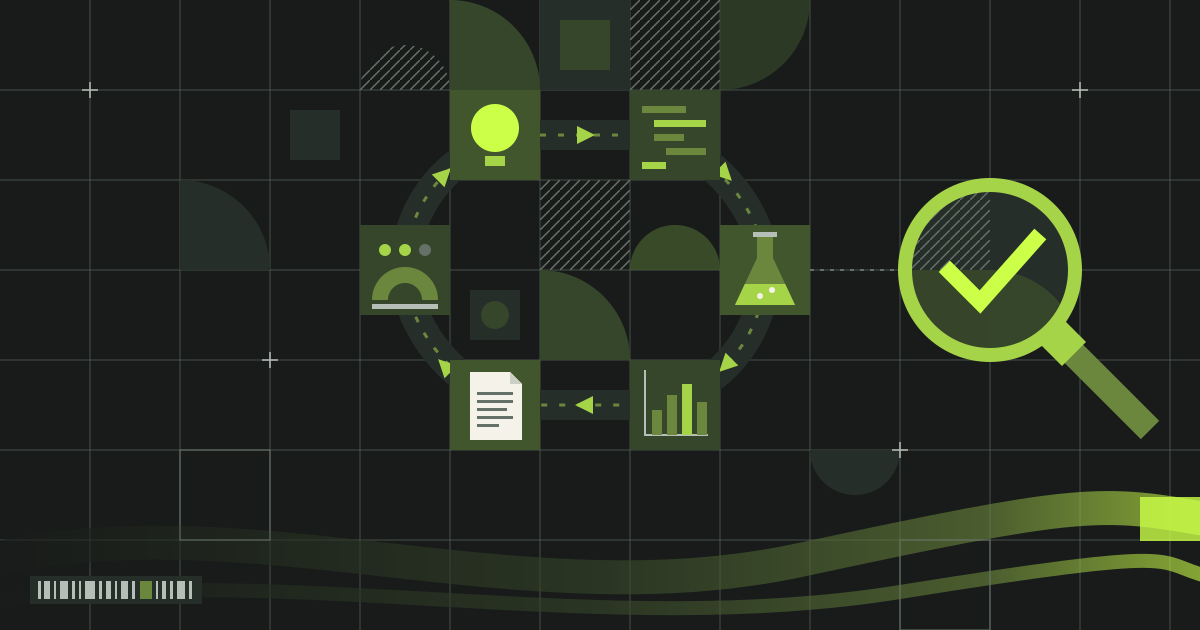
Already in 2024: AI moves through research from idea to paper
Sakana’s “AI Scientist” linked ideation, coding, experiments, manuscripts and simulated review in 2024. The preprint documents an early end-to-end workflow—and supports the expectation that more capable present-day systems could substantially improve it.
Sakana AI introduced “The AI Scientist” on August 13, 2024. The early date matters: core stages of a research project were already connected into an automated workflow. The demonstration covered selected areas of machine learning. [1]
Starting from human-provided code templates, the system developed ideas, searched the literature, wrote code, ran experiments, visualized results and produced manuscripts. An AI-based, simulated review then supplied feedback. The original paper is explicitly listed as an arXiv preprint, rather than an independently peer-reviewed journal publication. [2]
The project presentation promises faster research and wider access, but also acknowledges implementation and evaluation errors and risks to scientific quality control. [1] A favourable judgment from its own automated reviewer is not acceptance by an independent conference. The authors recommend treating generated papers as starting points for further scrutiny. [2]
Present-day interpretation: That this connected workflow already worked in 2024 makes substantial improvements with more capable present-day systems plausible. This is a reasoned expectation, not a current performance comparison established by the original preprint. Reliability, novelty and scientific value still require independent assessment.
Read as an indication, the question shifts from individual AI aids to the entire research process: who oversees the combination of automated knowledge production and automated evaluation, and who takes responsibility for the results?
Personal statement
The workflow shows that the entire scientific workflow can be fully automated (at around $15 per publication), thereby calling into question the scientific process itself, whose quality rests on peer review. Even though it is only a preprint, it was already demonstrated in 2024 that everything can be done by machines. The authors also deserve our thanks for the transparency they have provided.
Sources
This indication by Martin Ebner is licensed under
CC BY 4.0

Comments 0
Comments are moderated. New comments appear after review by the editors.
No comments yet.