

No. 050 DE · EN
When parents use AI to regrade: A new actor in the assessment debate
A German-language practice article adds a dimension to the assessment debate: AI-assisted parents question school grades and seek transparent marking criteria.
Each indication is a finding that shows how generative AI permeates everyday life.
50 of 50 indications
15 entries
No. 050 DE · EN
A German-language practice article adds a dimension to the assessment debate: AI-assisted parents question school grades and seek transparent marking criteria.

No. 049 DE · EN
An artist presented a Claude Monet water lily painting on X as AI-generated and received detailed criticism of its supposed flaws. The incident illustrates how claims about an image’s origin can shape its reception.
No. 048 DE · EN
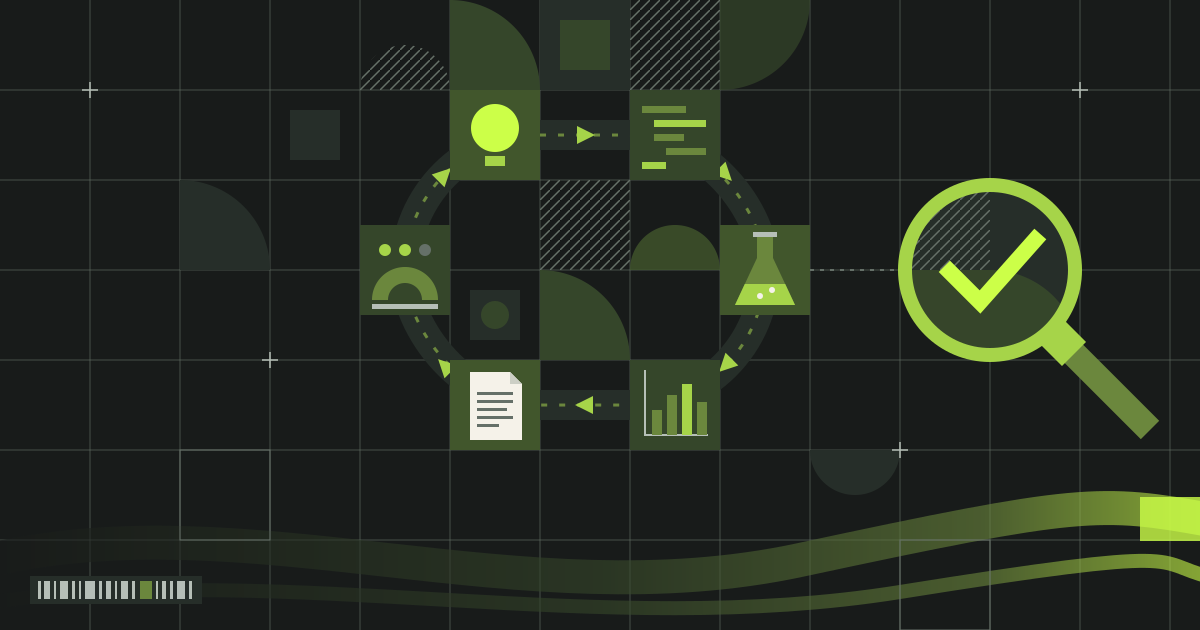
Sakana’s “AI Scientist” linked ideation, coding, experiments, manuscripts and simulated review in 2024. The preprint documents an early end-to-end workflow—and supports the expectation that more capable present-day systems could substantially improve it.

No. 047 DE · EN
PwC plans to train and certify more than 85,000 professionals in critical thinking and human judgment. Another indication of how human skills are changing as AI increasingly takes over cognitive tasks.

No. 046 DE · EN
Microsoft Distinguished Engineer Stephen Toub argues that manually reviewing every line of code is not only unrealistic but less effective than relying on specialized AI agents.

No. 045 DE · EN
A study across 27 European countries finds only moderate differences in ratings of real and fabricated news. Whether people or AI produced the content made little difference to credibility or willingness to share.

No. 044 DE · EN
AP describes a ChatGPT example: in English, China is not generally considered a democracy; in Chinese, the answer depends on the definition. A Nature study examines how state-shaped training data can contribute to such language differences.
No. 043 DE · EN
Baker and Hawn described in 2022 how educational algorithms can disadvantage learners. Their warnings predate the widespread use of generative AI and sharpen the focus on ethical responsibility today.

No. 042 DE · EN
AI is changing university research, writing and learning. Pinto and Ferreira recommend: pedagogical integration; redesigned assessment; clear policies developed with students; AI literacy; equity and inclusion; stronger longitudinal and Europe-specific research.

No. 041 DE · EN
Ahead of the US midterms, Dosimeter found Kremlin-aligned sources in 12.5% of tested AI answers. The investigation documents concrete examples and screenshots.
No. 040 DE · EN
A study calls for well-being as an EU AI policy goal: subsidized companies should strengthen relatedness, competence and autonomy and substantiate their societal benefits.

No. 039 DE · EN
Schools that want to disable Google's AI features apparently also lose access to traditional Google Search. Another indication of how generative AI is increasingly becoming an integral part of digital services.

No. 038 DE · EN
An Oxford study shows how AI can shift positions when editing and explaining posts. Its investigation of “Explain this post” on X highlights how platform instructions influence Grok’s responses.

No. 037 DE · EN
David Durman has received an exemption from personally using AI at the University of Kentucky. The humanist considers outsourcing thought a conflict with his moral responsibility.

No. 036 DE · EN
Two leading U.S. Democrats are demanding that President Trump preserve his conversations with AI chatbots. The move follows reports that he consulted Grok about a military operation in Venezuela.
35 entries
No. 035 DE · EN
Google's AI search is changing the relationship between people, information and websites. It is another step toward a digital world in which AI not only generates answers but increasingly takes over access to information.

No. 034 DE · EN
Brennan Center tests reveal factual and citation errors, readily generated deceptive election imagery and unreliable AI-image detection. The researchers call for verified sources, cross-platform provenance, consistent safeguards and human oversight.

No. 033 DE · EN
The New York Times reports on an epilepsy patient’s death after ChatGPT guided her medication reduction; her parents are suing OpenAI. The company states: “ChatGPT is not a substitute for medical care”.

No. 032 DE · EN
Seven percent of surveyed teachers in Germany have used AI for grading without checking the result, according to Bitkom. DER STANDARD’s report highlights the delegation of school assessment to AI.

No. 031 DE · EN
AI promises faster routine checks, additional error detection and constructive peer-review feedback. These benefits face inaccurate judgments, bias, manipulation and verification costs – time savings are not guaranteed.

No. 030 DE · EN
Intellectual sovereignty means acquiring and producing knowledge autonomously, thinking independently and justifying decisions through reasoned argument. Universities should cultivate this ability in their engagement with generative AI.

No. 029 DE · EN
Cache-to-Cache introduces a new way for LLMs to communicate: models transfer internal representations directly through their KV caches, instead of first writing messages to each other.

No. 028 DE · EN
FAZ reports on OpenAI’s results for 377 mathematical problems. The Association for Human Mathematics (AHM) criticises the mass release as “not a demonstration of scholarship, but a demonstration of power”.
No. 027 DE · EN
In Gary King and Steven Worthington’s study, AI reviews outperform human reviews on every evaluation criterion examined. The findings concern constructive feedback, rather than automated publication decisions.
No. 026 DE · EN
Anthropic defends training on lyrics; music publishers see threats to their rights and the market for human songwriting.

No. 025 DE · EN
A FAZ commentary uses a PHP vulnerability to question governments’ dependence on private AI companies.

No. 024 EN
In collaborative teaching methods, AI access becomes a phase-by-phase design choice. Students from three degree programmes endorse a deliberately AI-free thinking phase in Think-Pair-Share.

No. 023 DE · EN
With generative AI, people are redesigning their TVs’ user interfaces to suit their own preferences. What once required extensive programming skills is becoming increasingly accessible through so-called vibe coding.
No. 022 DE · EN
The most serious PHP flaw in over a decade was discovered not by a hacker but by an AI model: OpenAI's GPT-5.6 Sol. Websites worldwide, including the University of Vienna and TU Wien, went offline as a precaution.

No. 021 DE · EN
A philosophical paper questions the automation of higher education through generative AI.

No. 020 DE · EN
Even the final farewell is becoming a use case for generative AI. A Graz-based start-up is developing AI-generated funeral speeches, including an avatar of Vienna's cathedral priest Toni Faber.

No. 019 DE · EN
A question to AI is asked quickly, and the answer arrives just as fast. The scale of the effort behind this everyday experience usually remains invisible.

No. 018 DE · EN
Linux kernel development is moving away from the mandatory labelling of AI-assisted contributions. AI is evidently already so widespread in everyday programming that the existing notice hardly carries any informative value anymore.

No. 017 DE · EN
A student requests two master's thesis topics that were completed long ago. An AI may lie behind this, suggesting old theses as new topics. Accepted without verification, the suggestions produce a peculiar everyday situation.
No. 016 DE · EN
The Tagesschau shows how AI-generated music is flooding streaming services and why platforms are now introducing labels. The interview covers GEMA's legal victory against Suno, AI bands such as The Velvet Sundown, and the question of what music without a human creative process still is.

No. 015 DE · EN
An experiment by ProjectDiscovery shows how a manipulated AI model can trigger hidden actions through an inconspicuous word sequence. This places trust, permissions and the scope for action of AI agents at the center of attention.

No. 014 DE · EN
Anyone who gives AI agents access to their inbox also opens up other people's messages to them. Whether our communication is analyzed by AI thus increasingly depends on decisions that others make on our behalf.

No. 013 DE · EN
Steven Strogatz talks about the desire to discover something oneself when AI takes over mathematical research. Are AI’s advances eroding the next generation’s own ambitions?

No. 012 DE · EN
Chan et al. (2026) ask whether automated AI research could trigger an intelligence explosion.

No. 011 DE · EN
According to media reports, Pope Leo XIV warned the priests of his Diocese of Rome against having AI write their sermons.

No. 010 DE · EN
Creative Bloq reports protests from the Blender community against OpenAI’s advertising.

No. 009 DE · EN
Wagner et al. (2026) describe AI-assisted literature reviews: summarising, extracting and answering questions.

No. 008 DE · EN
Since 2025, Albania has used the virtual minister “Diella” for public procurement.

No. 007 DE · EN
OpenAI’s Intelligent UI already generates interactive calculators, games and interfaces right within a conversation.

No. 006 DE · EN
Torvalds (2026): a flood of duplicate AI security reports; he calls for real understanding.

No. 005 DE · EN
Artcraft: a developer uses AI to build open-source Adobe alternatives.
No. 004 DE · EN
Meyer (2025): a proteomics web app from four prompts, reportedly in under ten minutes.

No. 003 DE · EN
FHWien / Kroop (2026): an experimental approach to master’s theses centres on process, traceable decisions and verifiable artefacts.
No. 002 DE · EN
The Association for Human Mathematics criticises OpenAI’s AI-generated mathematical results.

No. 001 DE · EN
Nagler, Mayr et al. (2026): over 14,000 incoming TU Graz students, 2011-2025.