
The Jevons Paradox in the Post-Generative
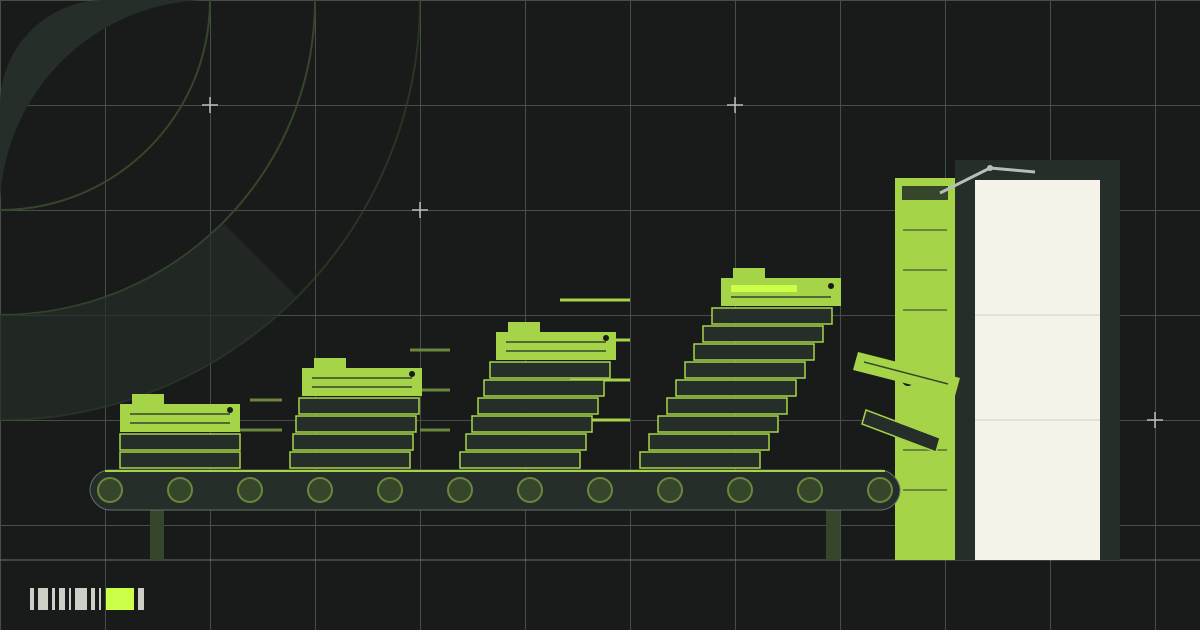
As early as the 19th century, William Stanley Jevons observed that the use of more efficient steam engines did not reduce coal consumption but increased it. What becomes cheaper gets used more. Time is no different: AI makes writing, summarizing and researching cheaper, and so more of it is expected – of me and of everyone else.
Hartmut Rosa describes the social structure behind this. Technology saves time per action, but the number of actions and experiences per unit of time grows even faster. This produces a cycle of acceleration: technology changes social conditions, which in turn raise the pace of life. This higher pace calls for even more technology. A society that can only stabilize itself through escalation has to get faster in order not to fall behind. If acceleration fails, standing still is not rest but being left behind.
AI is especially potent in this logic because it also accelerates activities that used to slow themselves down: thinking, drafting and weighing. Martin Ebner has already described how project proposals are written with the help of AI and then filtered out again. That is the cycle in miniature. Each side arms itself because the other has.
Who Is Actually Setting the Pace Here?
“I work at my own pace” – or so it seems. Actor-network theory, however, makes this “I” questionable. Bruno Latour showed with the example of the door-closer that delegating work does not abolish it but merely displaces it. The door-closer takes over the closing, but everyone who walks through the door now has to adjust to it.
It is the same with AI. I delegate writing and summarizing, and I align my way of working, my deadlines and other people’s expectations with the model’s pace. Agency then lies neither with me nor with the AI, but in the network of me, the model, the deadlines and the colleagues who also use AI. The Jevons Paradox does not occur in me but in this network: when everyone becomes more efficient, the standard rises for everyone, and the time saved is cancelled out by the higher pace.
In such networks, as Michel Callon shows in his study of the scallops of St Brieuc Bay, obligatory passage points emerge: points that everyone has to pass through. When everyone else delivers the proposal in two days, AI is no longer optional. And the better it works, the less I see into it. Control turns into trust, trust into dependence. And when the tokens run out, I stand still: the pace I have grown used to can no longer be kept up without the model.
Further reading:
- Callon, Michel (1984/1986): Some Elements of a Sociology of Translation: Domestication of the Scallops and the Fishermen of St Brieuc Bay. In: John Law (ed.): Power, Action and Belief. A New Sociology of Knowledge? (Sociological Review Monograph 32). London: Routledge, pp. 196–233. German translation in: Belliger/Krieger (eds.) (2006): ANThology. Bielefeld: transcript, pp. 135–174.
- Jevons, William Stanley (1865): The Coal Question. London: Macmillan.
- Johnson, Jim [= Bruno Latour] (1988): Mixing Humans and Nonhumans Together: The Sociology of a Door-Closer. In: Social Problems 35 (3), pp. 298–310. German translation in: Belliger/Krieger (eds.) (2006): ANThology, pp. 237–258.
- Rosa, Hartmut (2013): Social Acceleration, Columbia University Press

This statement by Kajetan Hoffmann is licensed under
CC BY 4.0

Comments 0
Comments are moderated. New comments appear after review by the editors.
No comments yet.